

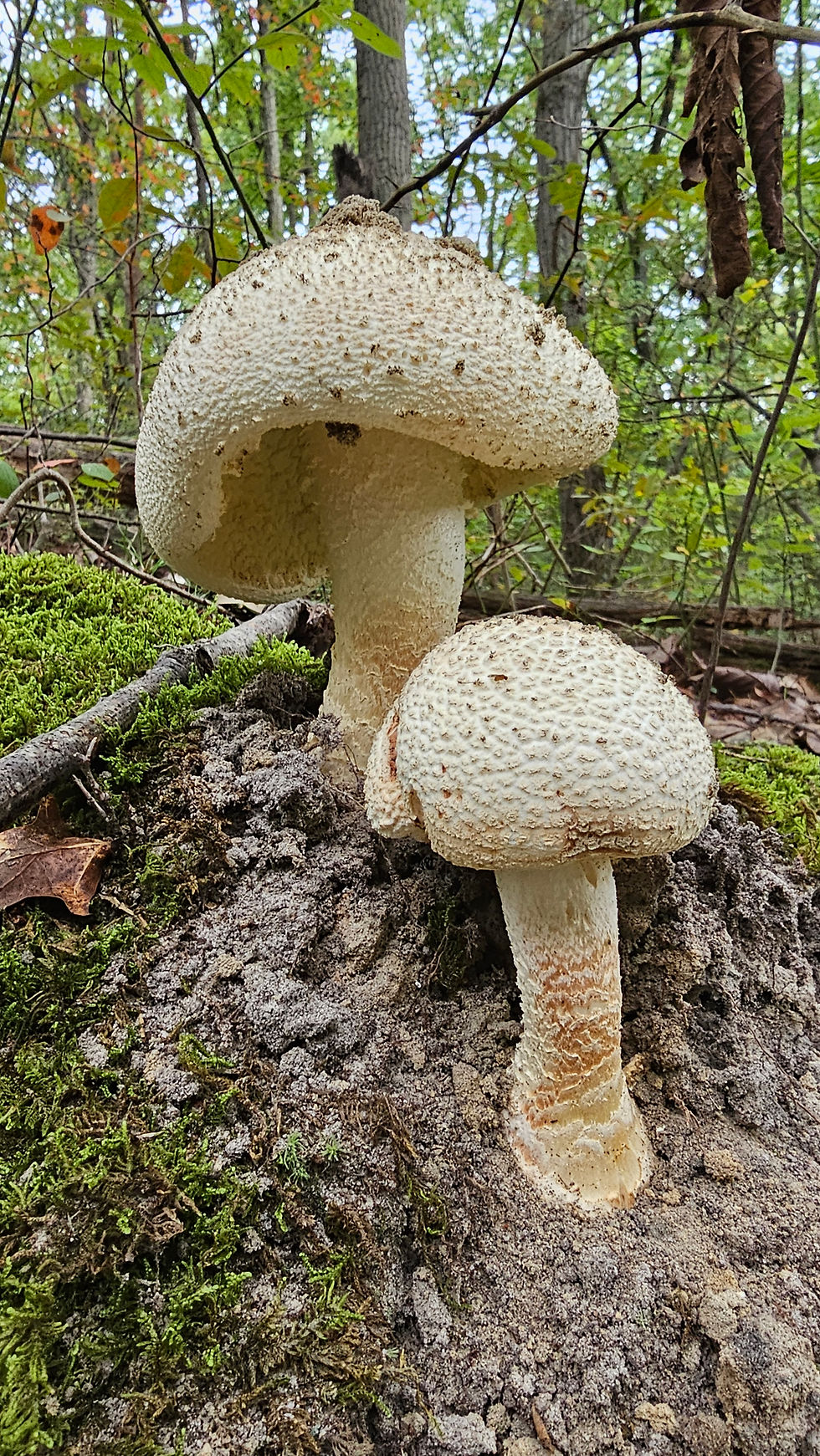

Birch Bolete
This mushroom grows in close partnership with birch trees, appearing from summer to fall. Its brown cap sits over a pale stem dotted with dark, rough scales called scabers. Instead of gills, the underside has tiny pores that start white and turn grayish with age. Unlike some boletes, its flesh does not stain blue when cut. Considered edible when well-cooked, though not especially flavorful.
Scientific name: Leccinum (birch-associated species group)


Mobile Menu

